
Construction Materials Processing
Bulk materials in the construction industry are tough on your equipment. Find a rotary valve that holds up against daily wear-and-tear to provide less maintenance and a longer lifespan.

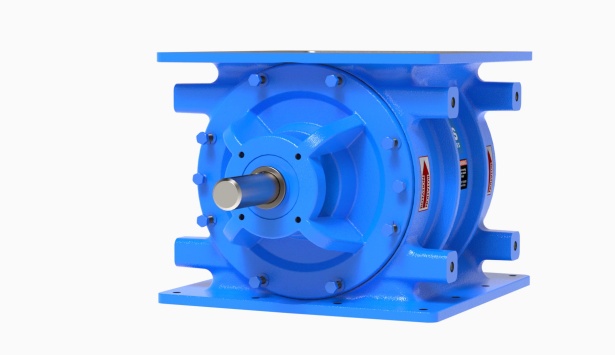
Rotary airlock valves for the construction industry
Built to withstand heavy-duty construction applications, our rotary valves will stand up to any job. Find valves with quality casting and improved longevity.

MD Series

CI Series

Aero-Flow™ Series

DR-S Series


Need help choosing the right valve?
That’s what we’re here for. Get in touch with your local ACS Valves representative to find out which valve is the best match for your construction material processing challenges.
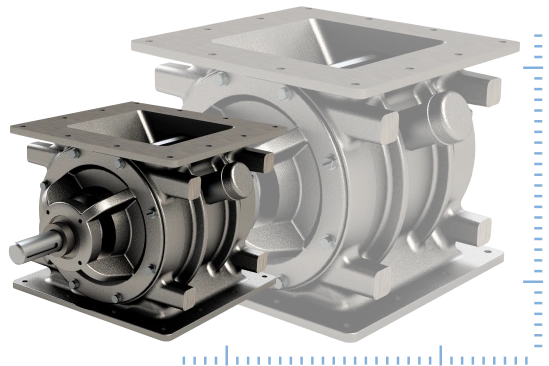
In-house design services
Get design helpView rotary valve technical drawings
See drawingsValve options for construction materials
Prevent abrasion and wear with extended-life features for your rotary airlock valve. Find accessories designed to improve safety and reduce maintenance cycles.


Common bulk materials
Our customers in the construction industry typically convey ingredients like these (and plenty of others too).
- Cement
- Asphalt
- Mineral ore
- Coal
- Gypsum
Valve resources for the construction industry
Browse blogs to find helpful tips and learn how rotary airlocks are configured to handle construction industry challenges.

5 tips for more efficient mineral processing
With its unique material properties and complex material handling systems, mineral ore is tricky to convey. Keep these tips in mind to optimize your process.

How to: Renew rotor tip clearances
Follow these simple steps to check clearances and adjust the blades on a rotor with adjustable tips.

How are rotary valves tested for safety?
To set you up for success, the ACS Valves team puts rotary airlock valves through some really rigorous tests.

How do I configure a valve for conveying cement?
In a heavy-duty setting, durability and reliability are key. These coatings and options help rotary valves handle cement and construction materials
Watch videos to see rotary airlock valves in action and find useful information for construction material processing.
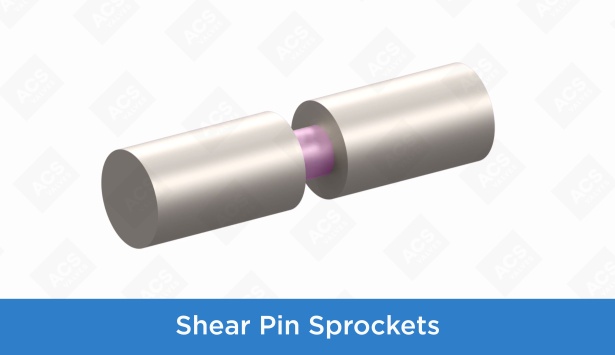
How shear pin sprockets prevent damage to your valve
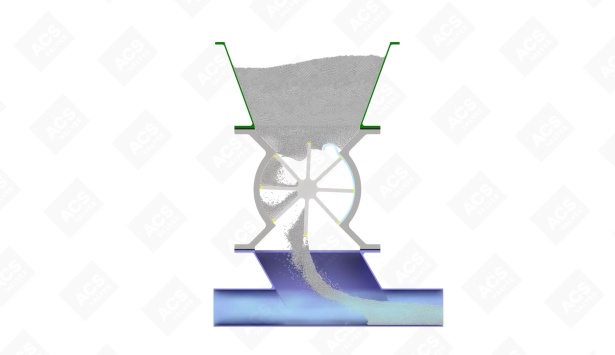
Why is rotor maintenance so important?
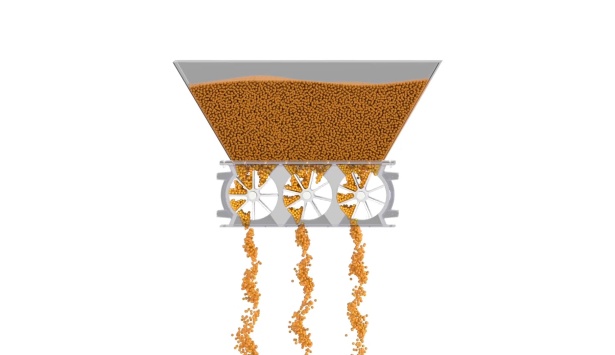
See the Multi-Port Valve at work in 3D
Drive Side Endplate Removal for ACST-4 Seals
Find downloads of rotary valve technical specs and learn more about the options available for the construction industry.
-
This link opens in a new tab
![ACS NFPA Pocket Guide]() ACS NFPA Pocket Guide
ACS NFPA Pocket GuideTips for NFPA compliance in your rotary valve and process
Download -
This link opens in a new tab
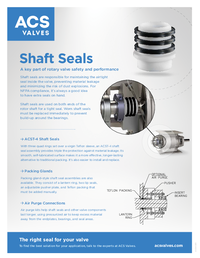 ACST4 Shaft Seals
Used on both ends of the rotor shaft for a tight seal. The option of air purge connections for severe conditions are available on either shaft seal, they help keep the material from building up around the shaft seals.
Download -
This link opens in a new tab
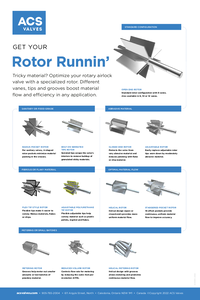 Types of Rotors
Our suite of rotors work with the demands, challenges and regulations involved with a wide range of materials. Choose the rotor that’s right for your valve.
Download -
This link opens in a new tab
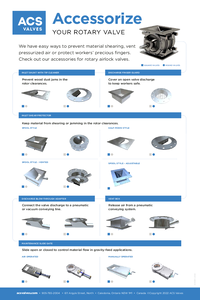 Rotary Valve Accessories
Get a bird's eye view of the rotary airlock valve accessories we offer for added safety, efficiency and longevity.
Download

Construction industry FAQs
You asked, we answered these common questions related to the construction material processing industry and rotary valves.
See all FAQs-
A.
For minerals that tend to jam inside your machinery, we recommend adding a shear protector or an inlet shunt to the rotary airlock valve. If you see jamming as a result of material buildup, an air purge kit can keep those areas clear with compressed air. A shear pin sprocket design can also protect other sensitive parts of the valve when jams do occur.
Relevant for: Technical Support, Difficult Products -
A.
If your minerals are extremely abrasive, a closed-end rotor can protect your bearings and endplates. It has discs on either end that prevent the material from scraping against other parts of the rotary valve. For facilities that do not handle combustible dusts, a rotor with adjustable tips can reduce maintenance costs, allowing you adjust the tips periodically instead of frequently reordering new rotor replacements.
Relevant for: Difficult Products, Durability -
A.
These are abrasive construction materials, so your rotary airlock valve will need a tough coating to withstand wear, minimize downtime, and extend its lifespan. Hard chrome is a common choice, but heavy plate chrome and tungsten are also solid choices for more heavy-duty applications. Talk to a rotary valve expert to choose the right one.
Relevant for: Difficult Products, Durability
Configure a valve for construction material processing
Construction materials have wide-ranging characteristics, so your rotary valve should be configured to meet the specific challenges of your application. Complete the form to ask our experts for help.